I still remember the days when I’d feel like I was drowning in a sea of deadlines and tasks, with no escape from the constant stress. That’s when I discovered the power of relaxation techniques to use at your desk – simple, yet effective ways to calm my mind and recharge my energy. For years, I’ve been teaching my clients how to incorporate these techniques into their busy schedules, and I’ve seen firsthand the transformative impact it can have on their productivity and overall well-being.
In this article, I’ll share my favorite practical tips for reducing stress and increasing focus using relaxation techniques that can be done right at your desk. You’ll learn how to breathe away anxiety and cultivate a sense of calm, even in the most chaotic of work environments. My goal is to provide you with honest, no-hype advice that you can start applying immediately, so you can say goodbye to burnout and hello to a more balanced, productive you. Whether you’re a busy entrepreneur or a stressed-out employee, these techniques will help you find peace and clarity in the midst of chaos, and I’m excited to share them with you.
Table of Contents
Guide Overview: What You'll Need
Total Time: 10 minutes to 1 hour
Estimated Cost: $0 – $10
Difficulty Level: Easy
Tools Required
- Chair with adjustable height and back support
- Computer or other device for guided meditations
Supplies & Materials
- Headphones for listening to guided meditations
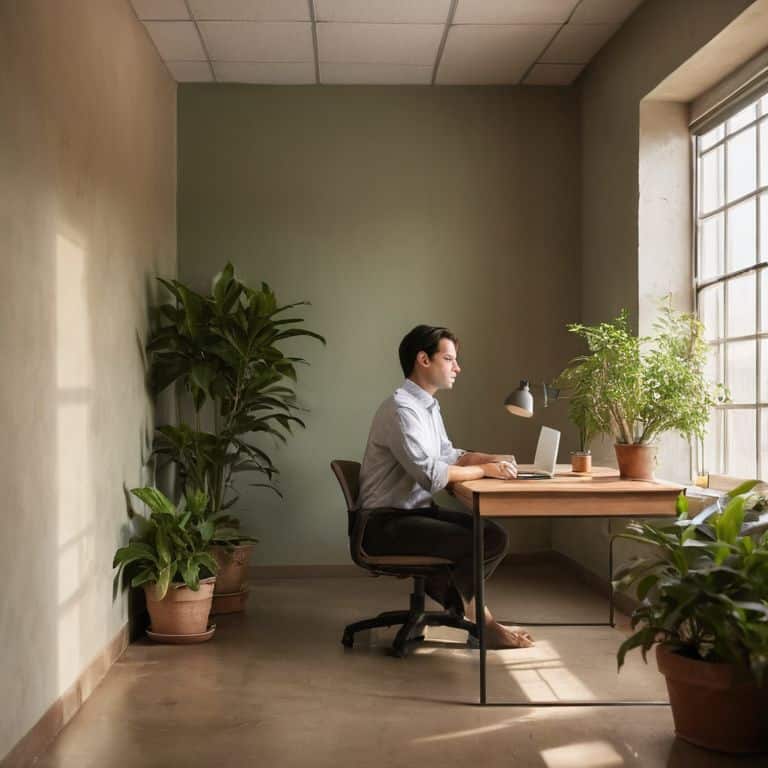
- Plant to create a calming atmosphere, approximately 6 inches in diameter
- Essential Oil such as lavender, for aromatherapy
Step-by-Step Instructions
- 1. First, let’s start with a simple yet powerful technique: deep breathing exercises. To do this, sit comfortably at your desk with your feet planted firmly on the ground, and close your eyes if that feels safe for you. Take a slow, deep breath in through your nose, filling your lungs completely, and then exhale slowly through your mouth. Repeat this process several times, focusing on the sensation of the breath moving in and out of your body.
- 2. Next, I want you to try some physical release techniques to loosen up any tension you might be holding in your body. Start by rolling your shoulders forward and backward in a circular motion, then move on to your neck, gently tilting your head from side to side. Don’t forget to release any tension in your hands by stretching your fingers and wrists – this can be a common area for stress to accumulate.
- 3. Now, let’s move on to a technique that combines movement and mindfulness: chair yoga. While seated, lift your arms overhead and stretch your fingertips towards the ceiling, taking a deep breath in as you do so. As you exhale, slowly lower your arms back down to your sides, keeping your shoulders relaxed. Repeat this motion several times, focusing on the sensation of your body moving and your breath flowing.
- 4. To help calm your mind and reduce stress, try using guided imagery techniques. Close your eyes and imagine yourself in a peaceful, safe space – this could be a beach, a forest, or even just a cozy room in your home. Use all of your senses to bring this space to life, noticing the sights, sounds, and smells that make you feel relaxed and at ease. Stay in this imaginary space for a few minutes, breathing deeply and slowly.
- 5. Another technique that can be helpful is progressive muscle relaxation. This involves systematically tensing and relaxing different muscle groups in your body, starting with your toes and moving up to your head. As you tense each muscle group, hold for a few seconds, and then release and feel the relaxation spread through your body. This can be a powerful way to release physical tension and promote a sense of calm.
- 6. Sometimes, our surroundings can contribute to our stress levels, so let’s try to create a more peaceful environment at your desk. Take a look around you and notice any sources of distraction or discomfort – this might be a cluttered workspace, a noisy coworker, or a harsh light. See if there are any small changes you can make to create a more calming atmosphere, such as tidying up your space, using a noise machine, or adjusting the lighting.
- 7. Finally, I want to encourage you to schedule regular relaxation breaks into your daily routine. This might mean setting a reminder on your phone to take a few deep breaths every hour, or blocking out time in your calendar for a short meditation session. By prioritizing relaxation and making it a non-negotiable part of your daily routine, you can help reduce stress and increase your overall sense of well-being.
Relaxation Techniques to Use

As I work with my clients, I’ve seen the profound impact of mindful breathing exercises for stress on their overall well-being. By incorporating simple, yet powerful techniques into their daily routine, they’re able to navigate challenging situations with greater ease. One of my favorite exercises is a 4-7-8 breathing pattern, which involves breathing in through the nose for a count of four, holding the breath for a count of seven, and exhaling through the mouth for a count of eight. This technique can be done discreetly at your desk, making it an ideal stress reduction tool for busy professionals.
In addition to mindful breathing, short meditation techniques for office workers can be incredibly beneficial. Even just a few minutes of meditation per day can help reduce stress and increase focus. I recommend starting with guided meditations, which can be found online or through mobile apps. These meditations often feature calming music and gentle guidance, making it easy to get started.
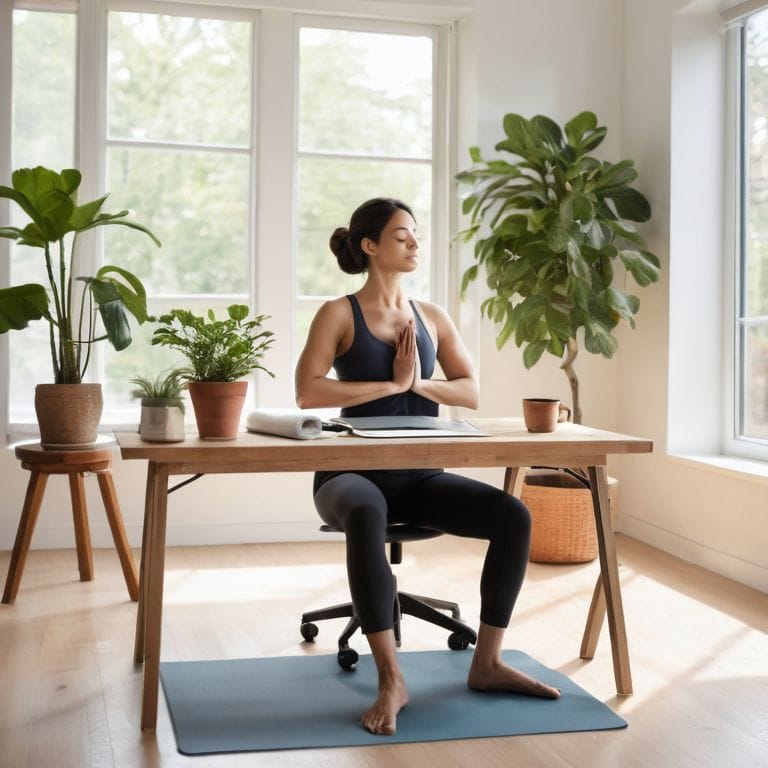
For those who prefer more physical activity, desk yoga for beginners is a great option. This can be as simple as stretching your arms over your head, rolling your shoulders, or doing some seated twists. These simple stretches for computer users can help reduce muscle tension and improve circulation, making it easier to stay focused and productive throughout the day. By incorporating one or more of these techniques into your daily routine, you can experience the benefits of stress reduction and improved overall well-being.
Desk Yoga for Stress Relief
As someone who’s passionate about restorative yoga, I’ve found that even simple desk stretches can be a game-changer for stress relief. By incorporating some gentle movements into your workday, you can increase blood flow, reduce tension, and boost your mood. Try some shoulder rolls, wrist extensions, or a simple neck stretch to get started.
I like to think of desk yoga as a form of “micro-self-care” – it’s all about taking tiny moments to prioritize your well-being, even when you’re in the midst of a busy workday. By combining these physical movements with some deep breathing exercises, you can create a powerful stress-relief practice that will leave you feeling more centered and focused.
Mindful Breathing at Work
When I’m working with clients, I always emphasize the power of mindful breathing at work. It’s amazing how something as simple as focusing on our breath can calm our minds and reduce stress. I recommend taking short breaks throughout the day to practice deep, intentional breathing. Even just a few minutes can make a big difference. Try inhaling for a count of four, holding for a count of seven, and exhaling for a count of eight – this can help slow down your heart rate and bring you back to the present moment.
I’ve seen this technique work wonders for my clients, and I’ve experienced it myself. By incorporating mindful breathing into your daily routine, you can reduce feelings of overwhelm and increase your productivity. Give it a try and see how it can help you stay focused and calm, even on the most chaotic of days.
My Top 5 Desk-Side Relaxation Hacks to Reduce Stress
- Take a 5-minute break to stretch and move your body, even if it’s just a few shoulder rolls and wrist extensions
- Prioritize deep, diaphragmatic breathing by placing one hand on your belly and the other on your chest, and focusing on the rise and fall of your belly as you inhale and exhale
- Use a desk plant or a calming essential oil diffuser to create a peaceful atmosphere and promote relaxation
- Try the ‘4-7-8’ breathing technique: breathe in through your nose for a count of 4, hold for 7, and exhale through your mouth for 8, to calm your nervous system
- Schedule ‘micro-moments’ of mindfulness into your calendar, such as a daily reminder to take 3 deep breaths or notice the sensations in your feet, to help you stay grounded and focused throughout the day
Key Takeaways to Reduce Burnout
Incorporating simple relaxation techniques into your daily work routine can significantly reduce stress and improve productivity, as I’ve seen with my own clients who’ve made these practices a non-negotiable part of their self-care
Desk yoga and mindful breathing exercises are accessible and effective tools for managing work-related anxiety, allowing you to reclaim a sense of calm and control in the midst of chaos
By committing to small, sustainable changes – like scheduling rest time in your calendar or practicing deep breathing exercises at your desk – you can build a stronger foundation for your mental and physical well-being, and create a more balanced, fulfilling career as an online creator
Finding Serenity in the Workspace
As I always say to my clients, ‘The most powerful tool for relaxation is not an app or a gadget, but the gentle pause between breaths – and it’s available to us all, right at our desks.’
Gabriela Rossi
Embracing Serenity in the Workspace
As we’ve explored various relaxation techniques to use at your desk, remember that the goal is to create a sustainable self-care routine. From desk yoga for stress relief to mindful breathing exercises, these practices are designed to be simple, yet powerful, tools to reduce burnout and increase productivity. By incorporating these techniques into your daily work routine, you’ll be better equipped to handle the challenges of your job without sacrificing your well-being. Whether you’re a freelancer or a full-time employee, taking care of your mental and physical health is essential for achieving success and maintaining a healthy work-life balance.
As you move forward, I encourage you to prioritize your well-being and make self-care a non-negotiable part of your daily routine. By doing so, you’ll not only improve your overall health and happiness but also become a more focused, creative, and resilient individual. So, take a deep breath, feel the calmness spread through your body, and remember that you are capable of creating a more balanced, fulfilling life – one that nurtures your mind, body, and spirit.
Frequently Asked Questions
How can I incorporate relaxation techniques into my busy work schedule without feeling like I'm falling behind?
I totally get it – finding time to relax can feel impossible when you’re slammed with work. But here’s the thing: tiny moments of calm can add up to make a big difference. Try incorporating micro-breaks into your day, like taking a few deep breaths between tasks or doing a quick desk stretch.
What are some discreet relaxation techniques I can use at my desk without drawing attention to myself?
For discreet relaxation at your desk, try subtle shoulder rolls, gentle wrist stretches, or toe wiggles. You can also practice micro-moments of mindful breathing, inhaling for 4 seconds and exhaling for 4 seconds, without drawing attention to yourself.
Can relaxation techniques really make a difference in reducing stress and improving productivity, or are they just a temporary fix?
I’ve seen firsthand how relaxation techniques can be a total game-changer for my clients. They’re not just a temporary fix, but a powerful tool to reduce stress and boost productivity in the long run. By incorporating simple practices like deep breathing, yoga, or mindfulness into your daily routine, you can better manage stress and improve your overall well-being.